
Sharding
Direct key sharding
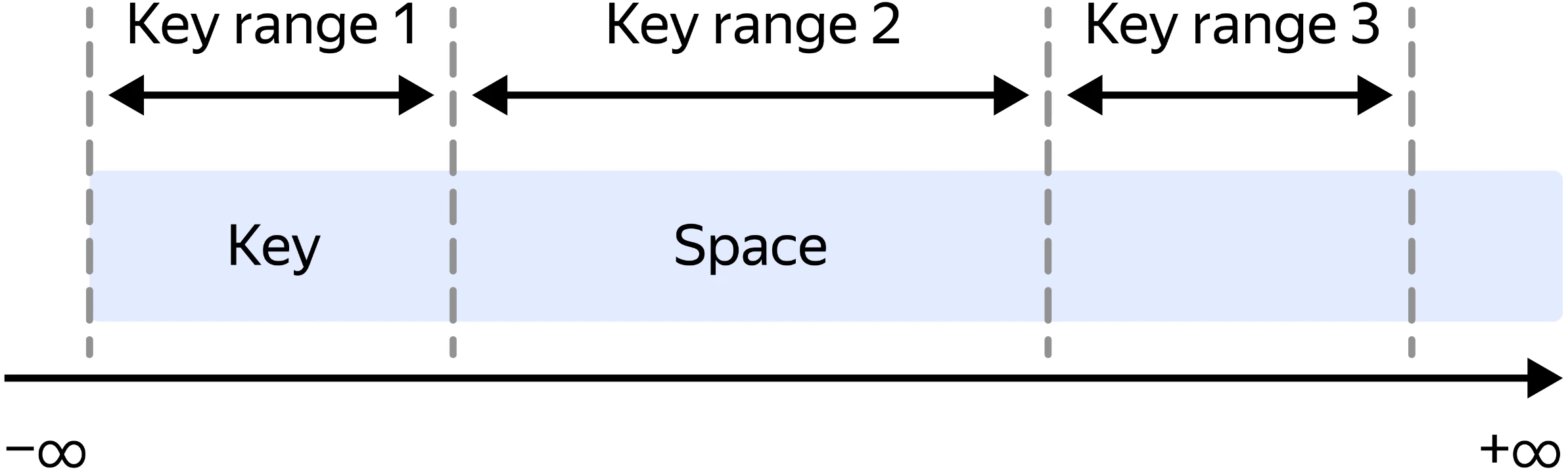
Direct key sharding (also known as range-based sharding) is a method of distributing data across multiple database shards where each shard holds a contiguous range of data. The sharding key value is used directly to determine which key range (and therefore which shard) the data belongs to.
For example, if you are sharding a database of user records by user ID, you might have one shard that holds users with IDs from 1 to 1000, another shard that holds users with IDs from 1001 to 2000, and so on.
This method allows for efficient range queries, as all the data within a specific range is located on the same shard. However, it can lead to uneven distribution of data and load between key ranges. If you need more uniform distribution, consider using hash-based sharding, which also uses key ranges but applies a hash function to the key first.
SPQR also supports composite (multi-column) sharding keys for more complex range-based sharding scenarios, such as sharding by tenant ID and user ID together.